
No Mean Preacher
A song thrush's inherited song, and the ecological intelligence we've stopped listening for.
When a song thrush greets the day with joy in the ash tree outside the window an hour or more before dawn, waking you and you know that your attention, and thoughts have been set for the day …
And hark! how blithe the throstle sings!
“I am here, this is me, this is my song, today” sang this mornings throstle.
This is not fell-song, that belongs to curlew higher up on Fairsnape and the Bowland Fells. This is lowland hedge-song. Thrush country.
Wordsworth immortalised this 10 gram song bird in The Tables Turned” in 1798, whilst at Alfoxden in the Quantocks,
He, too, is no mean preacher
In 1798 the song thrush would have been one of the most ordinary, unremarkable sounds of the British countryside, and that ubiquity perhaps explains Wordsworth’s choice as his “preacher”. It wasn’t a rare or special bird; it was everywhere, which is precisely the point of his argument here, profound teaching is available in the commonest things, if we’ll only “let Nature be your teacher.”
Today the picture is very different: the song thrush has shown a notable long-term UK decline through development and agriculture. Notable is where lowland rural song thrush populations have declined by roughly 70% since 1970 through intensively managed arable farmland.
So the bird Wordsworth once treated as background music is now a bird whose song is truly precious.
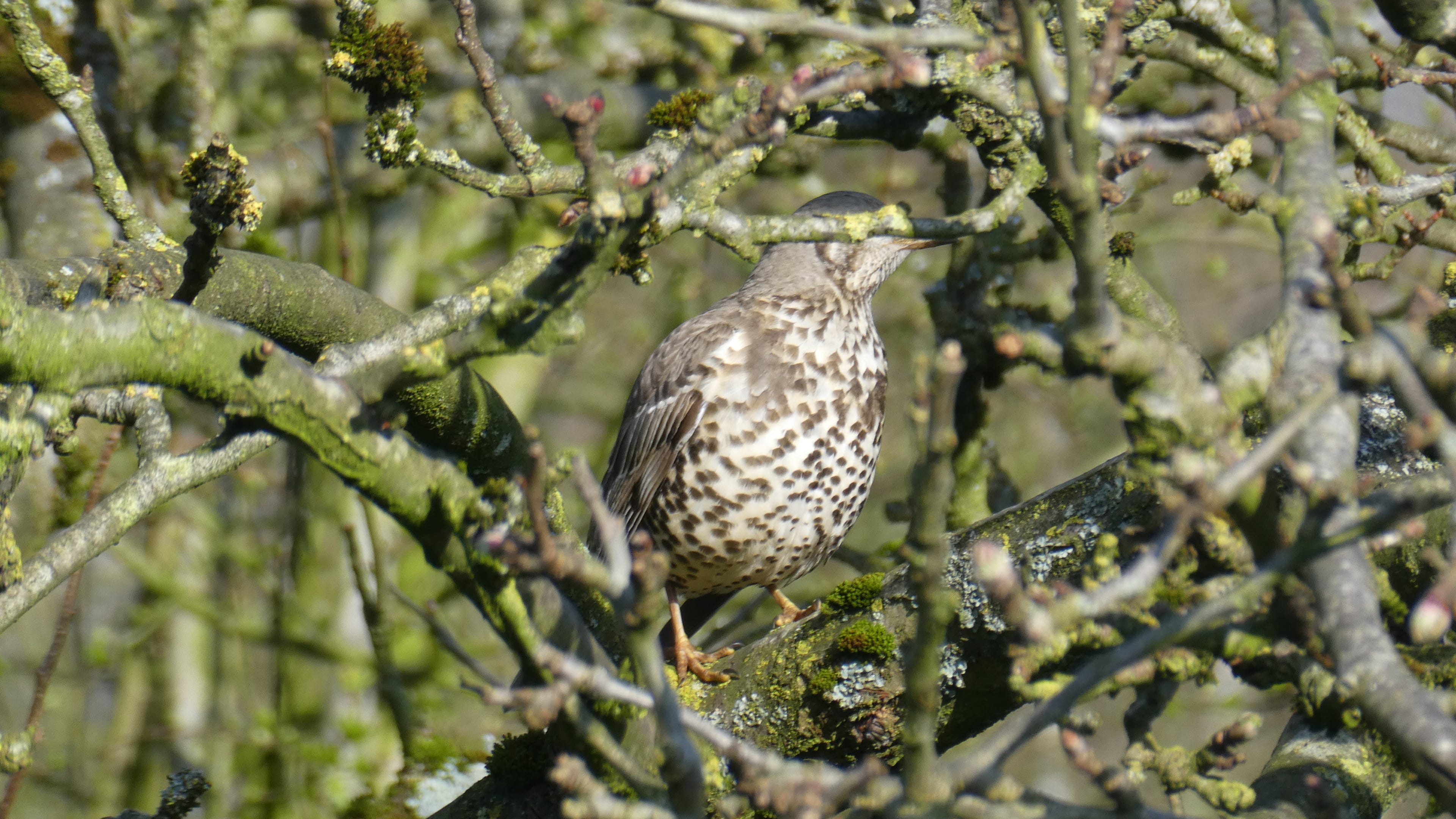
But wait, that song, that call to the day, heard this morning. Was that recently learnt or passed down through thrush generations - lovers of song - over millennia. Had its ancestors picked up from the clatter of Bronze Age travellers, from Roman centurions (*) here in the village or mimicked from recent emergency vehicle sirens.
In The Birds, the beautiful book from Robert Macfarlane and Jackie Morris, Macfarlane points out how our lover of song ‘sings for kicks and beauty’ as ‘having a DJ’s memory for tunes, with a repertoire that grows as he ages’.
So the idea of a phrase-lineage running continuously from Wordsworth’s Alfoxden throstle to the one outside my window this morning isn’t so fanciful, it’s roughly how thrush song transmission actually works, culturally as well as genetically.
Macfarlane turns Wordsworth’s throstle from a symbol of timeless nature into something closer to an oral tradition, as a living transmission chain, which sits very well against the claim that the song isn’t new revelation but something ancient being spoken again.
And so here, “no mean preacher” gets a deeper layer: literally an inherited teaching, handed down mouth to mouth across two and a quarter centuries of thrushes.
As we look to sharpen our connections and relationship with nature, give nature a voice in our organisations, bring nature onto our boards and into our design teams, this is but one ‘impulse from the vernal wood’ we should listen to and heed
(*) from Heron at the Crossing, a hybrid work in progress: cultural history, mythology, archaeology, nature writing, regenerative with ecological philosophy, thrutopian and speculative future fiction and yet something harder to name that sits between all of these. Not a novel pretending to be non-fiction or non-fiction pretending to be a novel. Genuinely both, and neither, at once. It is what happens when you take a specific place and follow its threads, weaving the temporal, cultural, ecological, mythological, legal, linguistic, without privileging one thread over the others.
The verses from The Tables Turned
And hark! how blithe the throstle sings!
He, too, is no mean preacher:
Come forth into the light of things,
Let Nature be your teacher.
and
One impulse from a vernal wood
May teach you more of man,
Of moral evil and of good,
Than all the sages can.