
Sorting nature into Bronze, Silver and Gold yet no mechanism for the land itself to speak
England’s 30by30 Delivery Plan to reverse nature decline
Published this week, our UK government’s England’s 30by30 Delivery Plan, is the latest attempt to reverse nature decline as “one of the defining challenges of our time, and one we must now meet with urgency” with the UK government committed to effectively conserve and manage 30% of our land and seas for nature by 2030.
I review it here through four lenses I keep returning to, that I am increasingly seeing as Regenerative Renaissance: Donella Meadows’ leverage points, Iain McGilchrist’s hemispheric distinction, Robin Wall Kimmerer’s Honourable Harvest, and Satish Kumar’s Soil/Soul/Society framing.
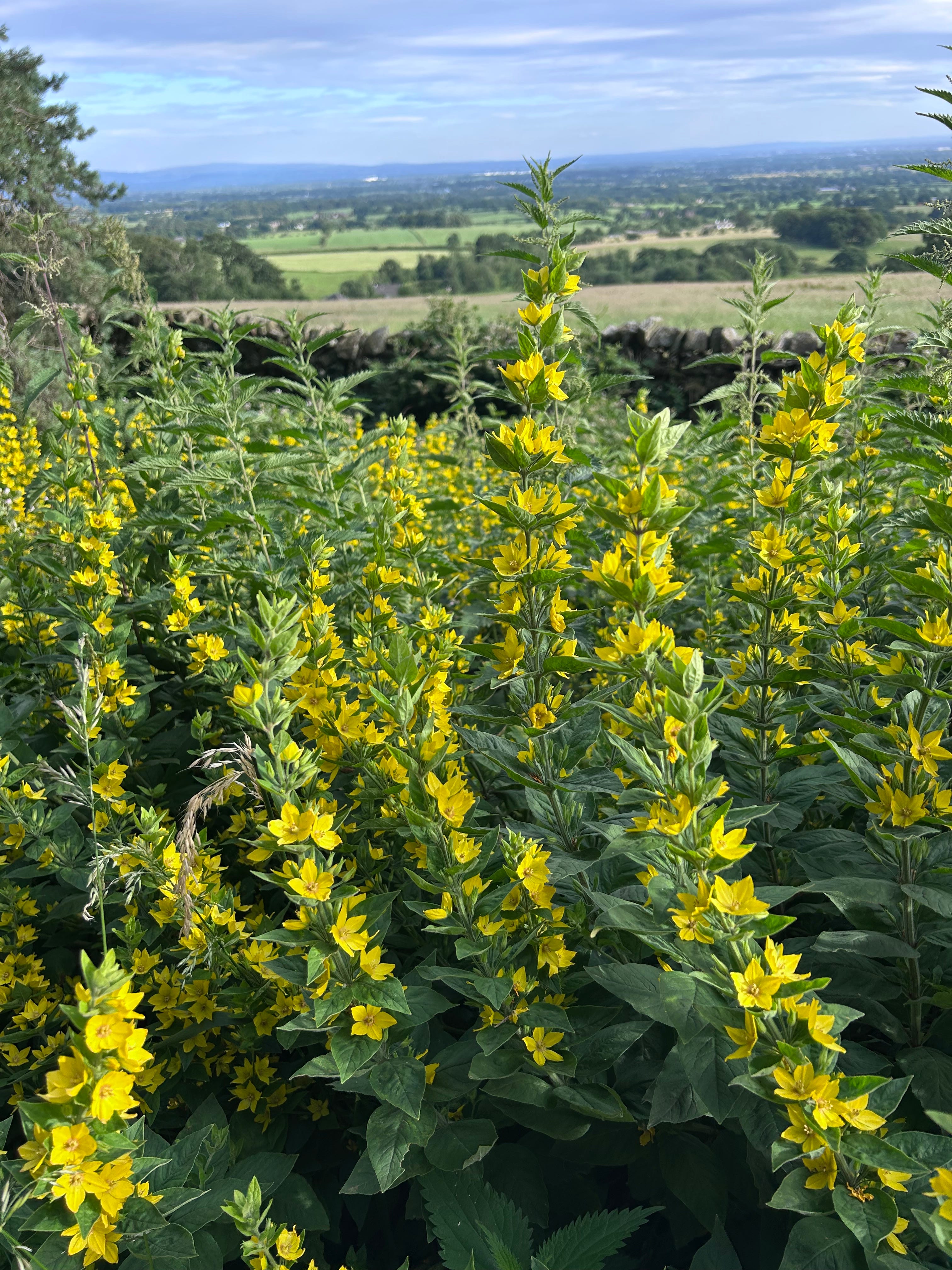
Bronze, Silver, Gold
The Delivery Plan sorts nature into three tiers, Bronze, Silver, Gold, the way a medal table sorts athletes. The ministerial foreword by Mary Creagh (Minister for Nature), admits that only 7% of English land currently meets the criteria, with just four years left to reach 30%.
It calls this a “step change in ambition, co-ordination and delivery.” But then it answers that admission with a portal … a four-question screening tool, a tiered pipeline, and new private finance mechanisms.
Whilst competent, it is sadly also unmistakably familiar. This is the same as all the plans it succeeds, the 25 Year Environment Plan, and the biodiversity strategies before that. This raises a question the plan itself doesn’t or can not address: if this format of intervention hasn’t worked before, how would repeating it, with better words and software, work now, and do so with in four years, rather than twenty-five?
Where the levers sit
Donella Meadows ranked the places you can intervene in a system, from shallow (subsidies, taxes, information flows) to deeper (the goals a system pursues, the paradigm out of which those goals arise).
Almost everything in this plan sits at the shallow end, the least likely to shift anything.
The portal is an information flow. The Bronze/Silver/Gold tiers are ‘buffers and thresholds’. Even the language of urgency "the next four years are critical" operates as a call to move faster within the existing paradigm, not a question about whether the paradigm is the thing that is failing.
Its the Emissary’s plan
Iain McGilchrist’s distinction between the brain’s two modes of attention (the Master, who apprehends the living whole in context and relationship, and the Emissary, who abstracts, categorises and manipulates parts) gives a clear reading.
This is Emissary text given priority. Land is “screened,” “assessed,” “counted.” Nature is priced: a stock of natural capital valued at £1.27 trillion, annual service flows of £30 billion, risk framed as potential GDP loss. The four screening questions ask about “purpose,” “management objective,” and freedom from “unsuitable activities” the language of a compliance audit, not a relationship conversation.
This is what happens when a mode of attention that is very good at counting things is set to solve a problem that isn’t fundamentally a counting problem.
The decline in nature is not, at root, a data-management failure. It is a disconnect in relationship, between people and land, between short-term extraction and long-term reciprocity, between people and systems that sustains us.
Biodiversity Net Gain
The plan’s treatment of Biodiversity net Gain illustrates the point well. BnG is mentioned twice, as a nature market to be grown, as a mandatory offset mechanism, and labeled as “easier routes to delivery” alongside blended finance and carbon platforms. Yet the delivery is financial, not nature recovery
What’s absent is any acknowledgment that BnG is not a neutral tool: it turns habitat loss and habitat creation into financial units that are tradeable off-site, so that damage in one place can be offset by credits in another.
This is Left Hemisphere logic in its purest form, biodiversity abstracted into a unit of exchange, decoupled from place, community and any relationship that held it.
A plan operating at paradigm shifting level would ask whether offsetting nature loss is compatible with regenerating nature at all, rather than absorbing BnG unexamined as one more delivery lever alongside conservation agreements and private finance.
What the plan doesn’t ask for in return
Robin Wall Kimmerer’s Honourable Harvest offers a protocol this document lacks: ask and listen, to take only what is given, use everything taken, give something back, sustain the ones who sustain you.
The delivery plan is not reciprocal but one of compliance, government asks, landowners screen, demonstrate and align, land counts or doesn’t. There is no mention where the taking requires any obligation to give back to nature.
This highlights commitment holder versus stakeholder. A stakeholder has an interest in an outcome, whereas a commitment holder is bound into a relationship of mutual obligation. The plan has landowners as stakeholders in a national target. It has no commitment holders in a living system.
Soil, thin Society, no Soul
Satish Kumar's framing makes the gap visible in a different manner. Soil is addressed, there are measures of peatland, woodland, grassland, all counted and funded. Society gets a campaign: Make a Metre Matter, employee volunteering, and a national education programme yet structured as recruitment to a metric rather than co-any authorship of a vision.
Soul is not mentioned. There is no mention anywhere in this document for land as ancestral, sacred, storied, or of any relationship that predates and exceeds government reporting cycles. The closest it comes is naming National Parks as "iconic and inspiring."
The Renaissance question
This is the pattern the Regenerative Renaissance keeps surfacing across the built environment and now, here, in land policy and nature recovery: paradigm-shifting interventions remain unaddressed. Sitting at the outer tiers of Meadows’ hierarchy, sophisticated in its tools, AI-powered landscape observatories, blended finance instruments, earned-autonomy pilots, all of which can look like progress precisely because they’re legible, fundable and measurable.
It produces deliverables without requiring anyone to change what they believe land is for.
Who is missing?
Nowhere in the plan’s drafting or governance architecture is there a mechanism for the land itself to speak. The delivery partners are landowners, farmers, National Estate members, protected landscapes teams, businesses, schools … all human interests that touch the land. The land is not among them. There is no equivalent of a Nature on the Board, no citizens’ assembly for a river or a chalk stream, no recognition for rights of nature, no attempt to build listening to nature into the process by which “success” gets defined.
Compare this with the deep listening built into indigenous land governance that Kimmerer and others describe, the councils that ask what land and forest want. The plan was written about land, by the very entities whose relationship to land created the decline it now seeks to reverse, with no protocol for the land to enter the conversation.
A paradigm-shifting delivery plan would offer, at minimum, a mechanism … however imperfect …for something other than human economic and administrative interest to sit at the table where the criteria, the tiers and the targets get set.
What a different regenerative plan would ask
Not tiers. And a different question to start from: what would it mean to govern from relationship, to treat a 30by30 plan built on the Honourable Harvest as an operating protocol?
Four years is not enough time to build such a shift from scratch. But it might be enough time to acknowledge, honestly, that Bronze, Silver and Gold are answering a question that was never quite the right one. And then to start asking a better one, before 2030 arrives and another failure is written up in exactly the same prose.
The proof
Less than 24 hours after the plan called on landowners to “step up,” the Church of England’s General Synod supplied a clear illustration of all the above. A private motion asking the Church Commissioners to rewild 30% of their land by 2030, backed by over 100 Synod members and 130,000 members of the public was blocked. In its place, Synod passed a substitute motion with no measurable targets at all. The Church Commissioners’ own paper gave the reason plainly: their endowment is held on trust for “sustainable income now, and long-term capital growth for the future,” and 30by30 commitments were assessed as inconsistent with that duty, this despite a legal opinion, commissioned by campaigners, finding no legal obstacle to adopting the targets.
Here, one of England’s largest landowners, holding 425,000 hectares of which just 3.5% currently supports nature, had the opportunity to answer the government’s own delivery plan with exactly the paradigm shift this post is arguing for. It answered instead with a balance sheet, with land as commodity.
Land as Community Not as Commodity
Land treated as commodity collapses. Land treated as community endures.
This is the famous message from Aldo Leopold back in 1949's Sand County Almanac, a land ethic that asks us to see land as community, not commodity or its conquerors. Seventy-five years later, a government still cannot find that right relationship and will continue towards biodiversity collapse, not recovery
This post develops the Meadows/McGilchrist/Kimmerer/Kumar perspectives applied elsewhere in Regen Notes, collectively as the Regenerative Renaissance. It is a companion piece to a forthcoming, shorter LinkedIn article version.
References
England’s 30by30 Delivery Plan
Church of England votes against plan to rewild 30% of its land by 2030
Related Regen Notes
We cannot bend the biodiversity curve through guidance, checklists and spreadsheets alone. (Kimmerer)
Three Days into Summer (Meadows)
The Master and His Emissary (McGilchrist)
Much Aldo About Everything (Aldo Leopold)